How to dispose of used medical bandages safely starts with noticing what is on the dressing. A clean adhesive strip is different from gauze soaked with blood or wound drainage. At home, seal used bandages in a small bag before placing them in household trash, unless local guidance says otherwise. Keep them away from children and pets. Wash your hands afterward.
Dr. Lisa Maragakis, an infectious disease and infection-prevention expert at Johns Hopkins Medicine, has emphasized, “Hand hygiene is the single most important way to prevent the spread of infections.” That matters here: even a quick dressing change can leave germs on your fingers, scissors, or the edge of a bin. Use gloves when appropriate, avoid squeezing or shaking soiled material, and clean reusable surfaces after handling it.
Healthcare settings may have stricter waste procedures than a household. Follow the facility’s infection-control policy, especially for dressings with substantial blood or material from a person with a known infection. If you are unsure, ask a clinician or local waste authority rather than guessing. Small details count. A tied bag is not a substitute for proper handwashing, and not every used bandage belongs in the same waste stream. The safest routine is usually simple, but it deserves care—and a second look when the dressing is heavily soiled.
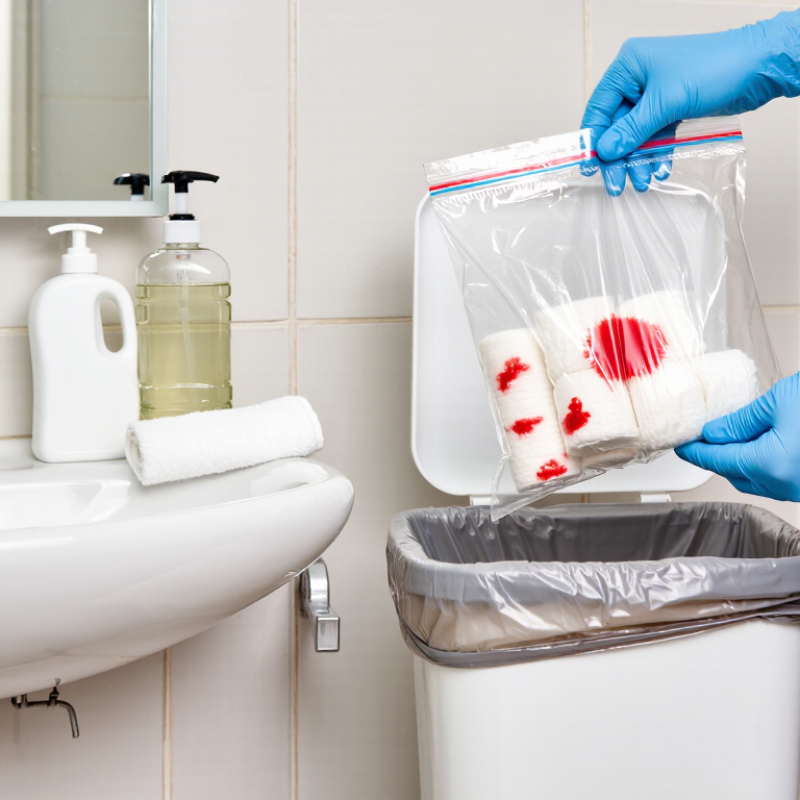
Begin with the bandage itself: a clean, dry adhesive strip is different from gauze soaked with blood or wound drainage. Check what it touched, how wet it is, and whether it leaks when handled. Small details matter. A faint spot and a saturated dressing are not the same.
The World Health Organization reports that about 15% of healthcare waste is hazardous, including infectious waste; the figure covers all healthcare waste, not bandages alone (WHO, “Health-care waste,” 2024). That context helps, but it cannot classify one dressing for you. CDC standard precautions treat blood and certain body fluids as potentially infectious. For a home dressing, place visibly blood-soiled material in a secure bag, and follow local health-department guidance for disposal. Do not squeeze it to judge how wet it is.
A dry, lightly stained bandage may be handled differently from material saturated with blood, leaking fluid, or used during care for a known infection. The distinction is not always neat. If the bandage is dripping, heavily soiled, or you are unsure, avoid direct contact and ask a clinician or local waste authority about the appropriate container. Use gloves when handling contaminated dressings, then wash your hands. One missed detail can change the safest choice.
Put on disposable gloves and place a small, sealable bag nearby. Use a clean work surface. Keep children and pets away.
Lift it gently, touching clean edges when possible. Fold the used surface inward and place it directly in the bag. Don’t shake it.
Don’t pull hard. Follow your wound-care instructions instead. Small details matter.
Seal it securely and follow local guidance for household medical waste. Heavily blood-soaked dressings may need different handling.
Ask a healthcare professional or local health department if the dressing is heavily soaked with blood or has special infection-control instructions.
Wear disposable gloves and use a suitable disinfectant. Follow its label and contact time. Don’t wipe it dry too soon.
Remove gloves without touching their outer surfaces, then wash your hands with soap and running water for at least 20 seconds. Don’t skip it.
Never mix cleaning products. Keep children and pets away until the surface is dry. For porous materials, follow care instructions or ask for guidance.
How to dispose of used medical bandages safely begins with checking what the bandage contains and how heavily it is contaminated. A lightly soiled bandage from routine home care may be handled differently from one containing significant blood or other potentially infectious material. Put on disposable gloves before handling it, and avoid shaking or squeezing the bandage. Place it directly into a suitable, sealable bag or container to prevent leaks and contact with other surfaces.
Keep ordinary household waste separate from waste that may require special handling, and follow local healthcare or waste-disposal guidance when the bandage is heavily contaminated or its status is uncertain. Use a secure disposal method appropriate to the type of waste, and keep it away from children and pets. When finished, clean any surface that may have been touched, remove and discard the gloves safely, and wash your hands thoroughly with soap and water.

 NuCure Medical