When should I switch from a bandage to a band-aid? The answer depends less on the calendar and more on what the wound looks and feels like. A bulky wrap may be useful when a cut is fresh, bleeding, or producing fluid. A small adhesive bandage can suit a clean, shallow wound once bleeding has stopped and drainage is minimal. “Band-Aid” is a brand name, but many people use it to mean any small adhesive bandage.
Wound-care expert Dr. Kimberly LeBlanc, a nurse and wound-care educator, offers a useful principle, paraphrased: choose a dressing that fits the wound’s changing needs. That means checking for five signs: bleeding has stopped; the wound is shallow and clean; fluid is slight; the edges look settled; and the surrounding skin is not increasingly red or swollen. A small pad should cover the cut without tugging painfully at the skin. Keep it clean and replace it if it becomes wet or dirty.
Not every wound is ready. If it keeps bleeding, opens when you move, or soaks through dressings, stay with appropriate coverage and seek medical advice. Watch for spreading redness, warmth, worsening pain, pus, or fever. Those details matter. A tidy-looking cut can still need care, and switching too early is not a test of toughness. For deep, gaping, or contaminated wounds, get professional guidance rather than relying on a smaller bandage.
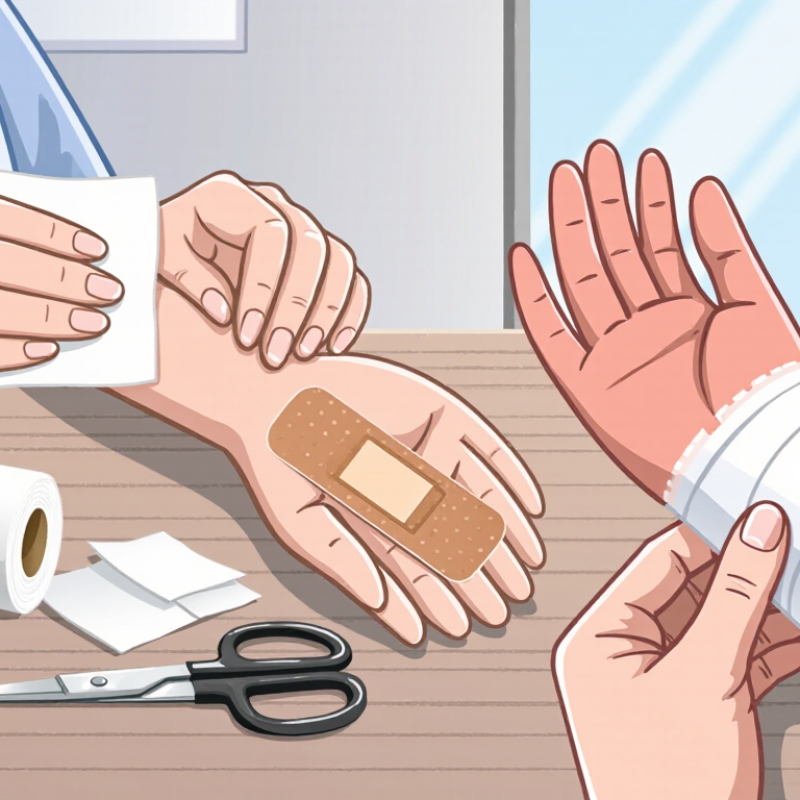
Bleeding Has Stopped and the Wound Is Stable
A pressure wrap or gauze pad can usually give way to a small adhesive bandage once bleeding has stopped and the wound looks stable. Lift the outer dressing gently; if it sticks, dampen it with clean water rather than pulling. The pad should not be filling with fresh blood, and the cut should not reopen when you move the nearby skin. No new bleeding is a good sign.
Rinse away visible dirt with clean running water, then pat the surrounding skin dry. If the wound is small and shallow, and its edges rest close together, an adhesive bandage can protect it from dust and rubbing. The absorbent center should cover the entire wound, while the sticky edges sit on dry skin. Snug, not tight. Change the dressing daily, or sooner if it gets wet or dirty. I still check again after a few hours; a wound can look settled and then ooze when a hand bends. Keep using a larger dressing or seek medical advice if bleeding returns, the cut is deep or gaping, or redness, warmth, swelling, or worsening pain develops.
5 Signs It May Be Time to Switch to an Adhesive Bandage
Use this checklist for a minor wound. Each bar represents one sign to check—not a score or medical measurement.
Consider an adhesive bandage when bleeding has stopped, the wound is small and superficial, the edges stay together, and the area is clean. Redness that spreads, increasing pain, warmth, swelling, or pus can signal infection; seek medical advice if these occur. For deep or gaping wounds, or bleeding that will not stop, get medical care.
The Wound Is Clean and Free of Debris
A clean wound is a practical sign that a bulky wrap may no longer be needed. After rinsing a small cut with clean running water, check it in good light. The surface should be free of grit, glass, and dried material; the skin around it should look clean, too. Pat the surrounding skin dry. If bleeding has stopped and the cut is shallow, a small adhesive dressing can protect it from sleeves, dust, and accidental rubbing. Keep the pad centered over the wound. Not quite right? Recheck it.
Evidence does not support treating every dressing choice as interchangeable. A 2016 Cochrane review included 29 studies and 5,718 surgical patients; it found no clear evidence that one dressing type better prevented infection in closed surgical wounds. Those results do not directly decide care for a small cut, but they do caution against assuming that a particular cover is always superior. Replace the dressing if it becomes wet or dirty, and check the wound during changes. Redness that spreads, increasing warmth, swelling, pus, or worsening pain warrants medical advice. A clean appearance is reassuring, not a guarantee; wounds can be easy to misjudge in poor light.
The Injury Is Small and Shallow Enough for an Adhesive Bandage
An adhesive bandage can suit an injury that is small, shallow, and easy to clean. A cut should affect only the surface layers of skin, with edges that rest close together. Think of a paper cut or a scrape from brushing a rough countertop. A thin scrape may sting, but it should not expose deeper tissue. Bleeding should stop after steady, gentle pressure. Size matters. If the wound is gaping, deep, or caused by a bite or puncture, a small adhesive dressing may not be enough.
Rinse the injury with clean running water to remove visible dirt. Pat the surrounding skin dry; a damp, oily surface can loosen the adhesive. Choose a dressing whose pad covers the entire wound, with clean skin around it for the edges to stick to. Change it daily, or sooner if it gets wet or dirty, and check the skin each time. Not every wound behaves as expected. Seek medical advice if redness spreads, swelling or pain worsens, pus appears, or bleeding will not stop with pressure. A wound that looks minor can still need care if it is contaminated or healing poorly.
The Surrounding Skin Is Dry and Ready for Adhesive
The skin around a wound should feel dry before you switch to an adhesive bandage.
After washing, pat it gently with a clean towel and wait until no dampness remains, especially in creases or beneath a watchband. A simple check: press a fingertip beside the wound. If it feels tacky or leaves moisture on your finger, wait. Adhesive applied to wet skin may lift early and rub the area. Dry surrounding skin does not mean the wound itself must be dry; follow care instructions for the wound.
Skin condition matters, too.
Look for redness, peeling, tenderness, or a pale, softened patch. These can signal irritation or excess moisture, not readiness for stronger adhesive. A systematic review in the International Wound Journal reported medical adhesive-related skin injury rates ranging from 0.3% to 29.8% across studies; settings and definitions varied, so the figures are not a personal risk estimate. Still, they underline why gentle removal and healthy surrounding skin matter. Not perfect science. If the skin is sore or fragile, a non-adhesive dressing may be a kinder choice; ask a healthcare professional if you are unsure.
The Wound Shows No Signs of Infection or Complications
A small adhesive dressing may replace a bulky wrap when a minor scrape or shallow cut is clean, bleeding has stopped, and the wound no longer needs extra padding. Look closely in good light. The skin should not be increasingly red, hot, swollen, or tender. There should be no pus, worsening pain, or red streaks. No fever, either. These are reassuring signs, though they cannot guarantee that a wound is complication-free.
Check how it behaves during the day. If the dressing stays mostly dry and the wound has little or no drainage, a smaller covering may be enough. Gently rinse away dirt and pat the surrounding skin dry before applying it. Keep the area covered if clothing rubs against it or it may get dirty; change the dressing if it becomes wet or soiled. A wound can look calm and still need protection. I would not rush to leave it uncovered just because it looks better. Seek medical advice if redness spreads, pain worsens, drainage appears, or the cut is deep, gaping, or caused by a bite.
5 Signs It May Be Appropriate to Switch From a Bulky Dressing to a Simple Adhesive Bandage — The Wound Shows No Signs of Infection or Complications
| Sign |
What to look for |
What it may indicate |
Practical next step |
| Bleeding has stopped |
The wound is no longer actively bleeding, and the dressing is not becoming wet with fresh blood. |
A bulky pressure dressing may no longer be needed for bleeding control. |
After gently cleaning the area, use a clean, appropriately sized dressing if protection is still needed. |
| The wound is small and superficial |
The injury is a minor scrape or shallow cut, rather than a deep, gaping, or puncture wound. |
A simple covering may be enough to protect it from dirt and friction. |
Choose a dressing that covers the wound without sticking to the injured surface. |
| The wound edges stay together |
The cut is not gaping, and its edges remain close together when the surrounding skin is relaxed. |
The wound may not need a bulky dressing to hold it in place. |
Do not rely on an adhesive covering to close a deep or widely separated cut; seek medical advice for those injuries. |
| There is little or no drainage |
The wound is dry or produces only a small amount of clear fluid, with no dressing repeatedly soaked through. |
A highly absorbent dressing may not be necessary. |
Check the wound daily and replace the covering if it becomes wet, dirty, or loose. |
| The surrounding skin looks calm |
There is no spreading redness, increasing warmth or swelling, worsening pain, pus, or red streaking. |
There are no obvious signs of a local infection or worsening complication. |
Keep monitoring the area. Seek medical advice if these symptoms develop or get worse. |
Note: These signs are general guidance for minor wounds, not a diagnosis. Get medical care for a deep or gaping wound, a bite or puncture, an embedded object, uncontrolled bleeding, or a wound that may need professional cleaning or closure.
Conclusion
When should I switch from a bandage to a band-aid? Consider changing to a small adhesive dressing once bleeding has stopped and the wound remains stable. Before applying one, make sure the area is clean and free of visible dirt or debris. An adhesive dressing is generally better suited to an injury that is small and shallow, rather than a deep or extensive wound.
The skin around the injury should also be dry so the adhesive can hold securely. Check the wound for signs of infection or other complications, such as increasing redness, swelling, warmth, worsening pain, or unusual discharge. If these appear, or if the wound is not improving, seek medical advice instead of simply changing the covering. Choose a dressing that covers the injury without pulling tightly on the skin, and replace it if it becomes wet or dirty.

 NuCure Medical