5 Tips on How to Use a Triangular Bandage for an Arm Sling

Time:2026-11-13 Author:Madeline
0%

An arm injury can make even a light sleeve feel painful. A triangular bandage can support the forearm and limit unnecessary movement while you arrange appropriate medical care. Knowing How to use a triangular bandage for an arm sling helps you act calmly, whether you are helping someone at home or responding to a minor accident outdoors. It is simple equipment, but placement matters.

This guide shares five practical tips: check the person’s condition, position the arm gently, secure the bandage without tightening it, support the elbow, and recheck the hand. Keep the injured arm close to the body, with the hand slightly higher than the elbow if that position is comfortable. Tie the ends beside the neck, not directly over the spine, and add soft padding beneath the knot. Small details matter.

Check the fingers before and after applying the sling. They should remain warm and normally colored, without increasing numbness or tingling. Loosen the bandage if symptoms appear. Do not force a painful arm into position or use a sling to treat a suspected serious injury on its own. Severe pain, visible deformity, an open wound, or cold, blue fingers needs urgent professional assessment. A sling is support, not a diagnosis. Even a neat-looking sling can be uncomfortable, so ask the person how it feels and adjust carefully. If you are unsure, seek help from a trained first aider or healthcare professional.
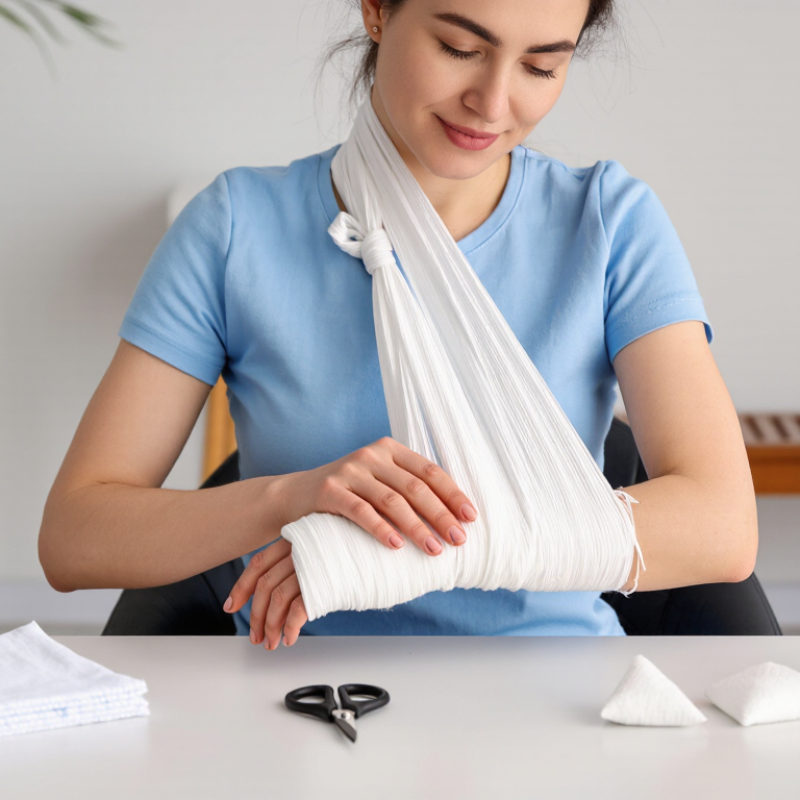
5 Tips on How to Use a Triangular Bandage for an Arm Sling

Choose a 90 × 90 × 127 cm triangular bandage, a common first-aid size

A 90 × 90 × 127 cm triangular bandage is a common first-aid size for making an arm sling. The two equal sides measure 90 cm; the longer edge measures 127 cm. That gives enough fabric to support most forearms while leaving room to tie the ends. Check the measurements before use, since packaged bandages can vary.

Spread the cloth flat, then place one end over the uninjured shoulder. Keep the injured arm bent gently across the chest, with the hand slightly higher than the elbow if comfortable. Slide the bandage beneath the arm. Bring the lower end up over the forearm and tie both ends beside the neck, not directly against the spine. Tuck the point near the elbow. A small safety pin can secure it, if available.

The first fold may look crooked. Adjust it rather than pulling the knot tighter. The fabric should support the wrist and forearm without pressing hard on the neck. Check the fingers for normal color, warmth, and feeling; loosen the sling if they become numb, cold, or bluish. If a serious injury is suspected, seek urgent medical care and avoid forcing the arm into position.

Position the forearm across the chest with the elbow bent near 90°

Position the forearm across the chest, with the elbow bent near 90 degrees. Keep the hand slightly higher than the elbow, and point the thumb upward if comfortable. This reduces strain and helps the sling support the arm’s weight. Do not force it. If pain or a suspected fracture makes this position difficult, support the arm where it rests and seek medical help.

Fold the triangular bandage under the forearm, bringing one end behind the neck and the other over the shoulder. Tie the ends beside the neck, not directly against the spine. Check that the fabric cradles the wrist and elbow without pressing into the skin. The knot may feel awkward; loosen and retie it rather than pulling harder. Keep it comfortable. Fingers should remain warm and their usual color. Loosen the sling if they become numb, cold, swollen, or pale.

The National Safety Council’s Injury Facts 2023 report estimated that 62 million people in the United States received medical attention for injuries in 2021. That figure covers many injury types, not arm injuries alone, but it shows why clear first-aid positioning matters. NHS first-aid guidance also advises supporting an injured arm in a sling. Recheck the elbow angle and finger circulation after tying, and get urgent care for severe pain, visible deformity, or an open wound.

Support the wrist and keep the hand higher than the elbow (NHS guidance)

Place the injured forearm across the chest, with the elbow bent comfortably. Slide the triangular bandage beneath the arm, keeping its longest edge under the forearm. Bring one end behind the neck and the other over the arm, then tie them beside the neck. Keep the knot away from the spine. Fold or adjust the fabric so it cradles the elbow without pressing into it.

Support the wrist carefully. NHS guidance advises keeping the hand higher than the elbow, which can help limit swelling. Check that the fingers remain visible and can move freely. The sling should feel secure, not tight. Check the fingers’ colour, warmth, and sensation; loosen the bandage if they become cold, pale, blue, numb, or tingly. It can feel awkward at first. Recheck the position after the person relaxes, because the fabric may shift. A small gap at the wrist is not always a problem, but a drooping hand needs better support. If the injury is severe, the arm looks deformed, or pain worsens, seek urgent medical advice rather than relying on a sling alone.

5 Tips for Using a Triangular Bandage as an Arm Sling

A simple five-step sequence, including NHS guidance to support the wrist and keep the hand higher than the elbow.

The bars show step order, not measurements. Keep the fingers visible and check them regularly for changes in colour, warmth, sensation, or swelling. Seek medical advice if you are concerned about the injury or circulation.

Tie the bandage beside the neck and pad the knot to reduce pressure

A triangular bandage should support the forearm without pulling the neck sideways. Keep the injured arm close to the body, with the hand slightly higher than the elbow if comfortable. Bring the bandage ends around the neck and tie them beside it, not over the spine. A knot can feel surprisingly sharp. Fold a small piece of soft cloth or gauze beneath it to spread pressure, then check that the knot does not rub the skin.

Tip: Support the arm while tying. Keep the knot on the uninjured side of the neck, and pad it with a flat, soft layer. Check the fingers every few minutes: they should stay warm, normally colored, and free of new numbness or tingling. Loosen the sling if symptoms appear. WHO’s 2023 Global Status Report on Road Safety estimates that 20–50 million people sustain non-fatal road injuries each year, so a simple sling may be useful while arranging appropriate care. It does not replace medical assessment.

The bandage should feel secure, not tight. If the arm is badly deformed, pain is severe, or circulation changes, avoid forcing it into position and seek urgent medical help. I’ve found the knot can drift as someone moves; recheck it, even if the first tie looks neat.

Recheck finger color, warmth, sensation, and movement after securing the sling (Red Cross guidance)

After securing a triangular bandage sling, keep the fingertips visible. Check their color, warmth, feeling, and movement. Compare them with the uninjured hand, since changes can be subtle. Look closely. Ask whether the fingers feel numb, prickly, or unusually painful. If the person can, ask them to gently wiggle each finger. Do not force movement. A quick glance may miss a change; good lighting helps, especially in a dim room.

Recheck after the arm settles into the sling, and again while waiting for medical assessment. Swelling may make a knot or bandage feel tighter. The forearm should be supported, but the fingers should not become cold, pale, blue, numb, or harder to move. If any of these changes appear, carefully loosen the sling and check again. Seek urgent medical help if symptoms persist or worsen, or if the fingers look blue or feel cold. Keep the arm supported and avoid unnecessary movement. It is easy to focus on tying a neat knot and forget the hand; that small check matters.

5 Tips on How to Use a Triangular Bandage for an Arm Sling

Tip What to Do How to Check
1 Support the injured arm in the position found, unless there is immediate danger. If the injury appears severe or the person has significant pain, seek urgent medical help. Do not force the arm into a different position or attempt to straighten a suspected fracture or dislocation.
2 Place the triangular bandage beneath the forearm, with its point extending beyond the elbow. Bring one end up around the neck and the other over the opposite shoulder. Keep the forearm supported and the hand visible. The hand should be slightly higher than the elbow when this is comfortable.
3 Tie the two ends in a secure knot at the side of the neck, not directly over the spine. Pad beneath the knot if needed. Check that the knot holds the arm comfortably without pressing painfully on the neck.
4 Fold or secure the loose point of the bandage near the elbow so the forearm is supported. Avoid covering the fingers. Make sure the sling supports the arm without being so tight that it restricts circulation or causes extra pain.
5 After securing the sling, recheck the fingers and compare them with the uninjured hand. Check finger color, warmth, sensation, and movement. If fingers become pale or blue, cold, numb, or increasingly difficult to move, loosen the sling and seek medical advice promptly.

FAQS

What size triangular bandage works for an arm sling?

A 90 × 90 × 127 cm bandage is a common size. Check the package, since dimensions can vary.

How should I position the injured arm?

Bend it comfortably across the chest. Keep the hand slightly higher than the elbow, if comfortable. Do not force the arm.

Where should I tie the bandage?

Tie the ends beside the neck, away from the spine. Keep the knot on the uninjured side when possible.

How can I make the knot more comfortable?

Place a flat, soft piece of cloth beneath it. The knot can feel sharp. Recheck it after the person moves.

Should the sling feel tight?

No. It should feel secure without pressing hard on the neck or arm. Adjust the fabric instead of tightening a crooked fold.

How can I tell if the sling is too tight?

Check the fingers for normal color, warmth, and feeling. Loosen the sling if they become cold, pale, bluish, numb, or tingly.

What should I do if the hand droops or the fabric shifts?

Adjust the fabric to support the wrist and forearm. Recheck the position after the person relaxes. It may look uneven at first.

When is a sling not enough?

Seek urgent medical care if the arm looks deformed, pain is severe, or circulation changes. Do not force the arm into position.

Conclusion

How to use a triangular bandage for an arm sling begins with choosing a suitable first-aid bandage, commonly about 90 × 90 × 127 cm. Gently position the injured forearm across the chest, with the elbow bent at roughly a right angle. Arrange the bandage so it supports both the forearm and wrist, keeping the hand slightly higher than the elbow. This position can help support the arm while keeping it comfortable.

Bring the bandage ends around the neck and tie them securely beside the neck, rather than directly at the back. Place soft padding beneath the knot to reduce pressure. Once the sling is in place, check that the fingers remain their usual color and warmth and that the person can feel and move them. If the sling causes increasing pain, numbness, or changes in the fingers, loosen it and seek appropriate medical advice.

Madeline

Madeline

Madeline is a dedicated marketing professional with a wealth of expertise in our company's core offerings. With a keen understanding of the industry, she brings a unique perspective to her role, consistently delivering high-quality content that highlights the superior aspects of our products. As......