When an injury happens, a bandage must do more than look secure. It should hold a dressing, protect the wound, and allow regular circulation checks. What is PBT bandage used for in first aid? Usually, it is used as a lightweight, elastic wrap for securing sterile gauze or supporting soft-tissue injuries. PBT refers to polybutylene terephthalate, a flexible material commonly used in conforming bandages.
The need for practical first-aid knowledge is substantial. The World Health Organization’s Global Status Report on Road Safety 2023 reports approximately 1.19 million road deaths annually. Many other injuries occur at home, workplaces, and sports facilities. A simple wrap can help, but only when applied correctly. The American Red Cross Scientific Advisory Council recommends controlling bleeding with direct pressure and checking circulation after applying a bandage. PBT bandages support that process; they do not replace pressure, wound cleaning, or professional assessment.
A PBT wrap may feel comfortable around an ankle, wrist, arm, or knee. It stretches gently and usually follows body contours without bulky folds. However, comfort can create false confidence. It is not normally a sterile wound covering, and it should not be wrapped tightly enough to cause numbness, pale skin, cold fingers, or increasing pain. The IFRC International First Aid, Resuscitation and Education Guidelines 2020 also emphasize reassessment after first-aid care. That step is easy to miss. This guide examines five practical tips, including choosing the right size, securing dressings, avoiding excessive pressure, and knowing when medical help is needed. Not every situation is suitable for a PBT bandage. Recognizing that limitation is part of safe first aid.
What Is a PBT Bandage and How Does It Work?
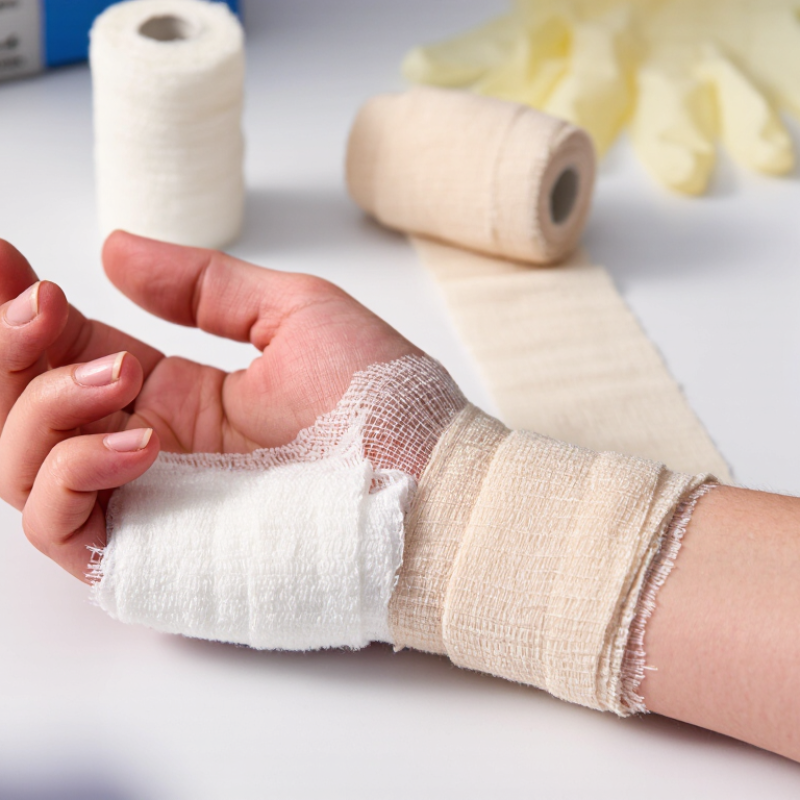
A PBT bandage is a soft, lightweight, elastic bandage used to hold dressings in place. PBT usually refers to a conforming bandage made with polyester fibers. Its knitted structure stretches gently around fingers, ankles, elbows, and other uneven areas. The material follows body movement without slipping easily.
It works by wrapping around a wound dressing and applying light, even pressure. This pressure helps keep the dressing close to the skin and may reduce minor swelling. The bandage itself is not a complete treatment for heavy bleeding. Place a sterile dressing over the wound before wrapping. Leave the fingertips or toes visible when possible. Their color and warmth can show whether circulation remains normal.
In practice, a frequent mistake is wrapping it too tightly. A secure bandage should feel supportive, not numb or throbbing. Check the skin after several minutes. Loosen the wrap if the area becomes pale, blue, cold, or unusually painful. PBT bandages can also support a sprain temporarily, but they do not repair damaged tissue. Severe pain, deformity, uncontrolled bleeding, or suspected fracture needs professional medical assessment. The bandage may look simple, yet pressure control takes judgment. Even experienced helpers sometimes need to unwrap and apply it again.
Which First-Aid Injuries Can a PBT Bandage Help Treat?
A PBT bandage is a stretchable, breathable wrap used to secure dressings during first aid. It can help protect minor cuts, grazes, and shallow skin wounds after sterile gauze covers the injury. The wrap keeps the pad in place while allowing limited movement. It should not replace direct pressure during heavy bleeding. Hold firm pressure first.
It can also support a mild sprain or strain around a wrist, ankle, or finger. Apply it evenly, starting below the injured area and moving upward. The pressure should feel supportive, not painful. Check the fingers or toes for warmth, normal color, and sensation. Too tight.
A PBT bandage may hold a cold pack over a swollen joint, but place cloth between the pack and skin. Do not wrap over an obviously deformed limb, severe swelling, or suspected fracture without professional advice. A common first-aid mistake is focusing on neat wrapping instead of circulation. Loosen the bandage if numbness, tingling, increasing pain, or bluish skin appears. Deep wounds, uncontrolled bleeding, animal bites, and serious burns need urgent medical attention. These limits are easy to overlook, especially when the injury looks small at first.
5 Tips: What Is PBT Bandage Used For in First Aid? — Which First-Aid Injuries Can a PBT Bandage Help Treat?
| Tip |
First-Aid Injury or Situation |
How a PBT Bandage Can Help |
Recommended First-Aid Use |
Key Safety Point |
Support Level |
| 1 |
Minor cuts and abrasions |
Holds a sterile gauze pad or non-stick dressing in place and helps protect the injured area from friction and dirt. |
Clean the wound, control bleeding with direct pressure, apply an appropriate dressing, and wrap the bandage comfortably over it. |
A PBT bandage is not a substitute for wound cleaning or a sterile dressing. Do not wrap directly over an unprotected open wound. |
High |
| 2 |
Light bleeding from a dressed wound |
Provides light, even pressure over gauze and keeps the dressing secure during movement. |
Use it after applying direct manual pressure and a suitable wound dressing. Check whether bleeding has stopped without repeatedly removing the dressing. |
For severe, spurting, persistent, or rapidly soaking bleeding, seek emergency medical help and maintain firm direct pressure. |
High |
| 3 |
Sprains and strains |
Can provide gentle compression and help support a temporary dressing or cold pack around an injured joint. |
Apply a comfortable wrap around the affected area, keep the limb supported, and use cold therapy when appropriate during the early stage of injury. |
Do not make the wrap tight. Loosen it immediately if numbness, tingling, increasing pain, pale or blue skin, or cold fingers or toes develops. |
Moderate |
| 4 |
Minor swelling or soft-tissue bruising |
Offers light compression that may help secure a dressing and limit unnecessary movement around the affected area. |
Use a padded, non-constrictive wrap together with rest and elevation when suitable. Monitor the area regularly. |
Do not use compression over suspected fractures, severe swelling, deformity, or loss of circulation without professional assessment. |
Moderate |
| 5 |
Holding a cold pack or splint in place |
Its stretch and conforming structure can help keep a cold pack, padding, or temporary splint positioned. |
Place a cloth barrier between the skin and cold pack, then secure it with a loose, even wrap. For suspected fractures, minimize movement and arrange medical evaluation. |
Check skin color, warmth, sensation, and comfort frequently. Never use the bandage to force a deformed limb back into position. |
High |
Important: A PBT bandage is generally a lightweight, elastic, conforming bandage used to secure dressings and provide light support. It does not replace professional medical care, a sterile wound dressing, a tourniquet, or a properly applied rigid splint. Seek urgent medical attention for severe bleeding, deep or contaminated wounds, suspected fractures, major burns, loss of sensation, or signs of impaired circulation.
How to Apply a PBT Bandage Step by Step
A PBT bandage is a lightweight, elastic wrap used to secure dressings and support minor injuries. It should not touch an open wound directly. Cover the wound with a sterile pad before wrapping.
Wash your hands and check the injury carefully. Place the dressing over the wound, then hold it gently in position. Start wrapping below the injured area, moving upward with even turns. Overlap each layer by about half its width. Keep the bandage firm, not tight. Leave fingers or toes visible when possible. This helps you monitor swelling and skin color.
Secure the end with tape or a safe fastener. Do not use pins near the wound. Check circulation after several minutes. The skin should remain warm and normally colored. Ask about numbness, tingling, increasing pain, or cold fingers. Loosen the wrap if these signs appear. I once underestimated how quickly swelling could develop, so this check matters. Avoid using a PBT bandage as a tourniquet. It is not designed to stop severe bleeding. Apply steady direct pressure and seek urgent medical help for heavy bleeding, deep wounds, or suspected fractures. Replace a wet or dirty wrap promptly. A slightly uneven wrap is acceptable; excessive pressure is not.
How to Secure and Monitor a PBT Bandage Safely
What Is a PBT Bandage Used For in First Aid?
A PBT bandage is a soft, stretchable polyester bandage used to secure gauze, dressings, and cold packs. It is not usually the main tool for stopping heavy bleeding. Apply firm, direct pressure with sterile gauze first. Then wrap the PBT bandage over the dressing to keep it stable during movement.
The wrap should feel supportive, never painfully tight. Anchor it below the injury and overlap each turn by about half its width. Keep fingers or toes visible when possible. Check skin color, warmth, sensation, and movement before and after wrapping. Ask about increasing pain or numbness. These small checks matter. A loose edge can expose the wound, while excessive tension may reduce circulation. In practical first-aid training, this is an easy mistake to make.
The World Health Organization reported approximately 1.19 million annual road-traffic deaths in its Global Status Report on Road Safety 2023. The CDC also identifies falls as the leading cause of emergency-department visits in the United States. Many injuries need simple support before professional care arrives. Recheck the bandage after ten minutes, especially if swelling develops. If blood soaks through, add another dressing without removing the original pad. Seek urgent medical help for uncontrolled bleeding, deep wounds, pale or blue skin, loss of sensation, or suspected fractures. A PBT bandage can secure protection, but it cannot replace clinical assessment.
When Should a PBT Bandage Be Removed or Replaced?
5 Tips: What Is a PBT Bandage Used For in First Aid?
A PBT bandage gently holds gauze against a wound and supports light sprains. Remove or replace it when it becomes wet, dirty, loose, or soaked with blood. A damp wrap can trap moisture around broken skin. That may delay healing.
The World Health Organization reported that 7 in 100 acute-care patients in high-income countries acquire at least one healthcare-associated infection. Good dressing hygiene still matters in basic first aid.
Check the fingers or toes after wrapping. They should remain warm and normally colored. Remove the bandage promptly if numbness, tingling, increasing pain, swelling, or bluish skin appears. The wrap may be too tight.
Replace it if blood reaches the outer layers, but do not pull away gauze stuck to the wound. Add clean gauze and seek medical help for persistent bleeding, deep cuts, or exposed tissue.
Use clean hands and fresh material during replacement. Change a covering according to the wound’s moisture and drainage, not only the clock. In practice, people often leave a “secure” wrap unchanged too long. I have seen this mistake hide swelling beneath the fabric. That is worth reconsidering.
A PBT bandage should support healing, not become a substitute for wound assessment. WHO infection-prevention guidance and American Red Cross first-aid recommendations both emphasize clean coverage, observation, and timely escalation.
Conclusion
What is PBT bandage used for in first aid? A PBT bandage is a lightweight, elastic conforming bandage designed to hold dressings in place and provide gentle, even support around an injured area. It can be useful for covering and securing gauze over minor cuts, scrapes, burns, sprains, and strains, while allowing enough flexibility for comfortable movement. It does not replace direct pressure, wound cleaning, or professional medical care when an injury is severe.
To apply it, first check and cover the wound with a suitable sterile dressing. Wrap the bandage smoothly around the area, overlapping each layer without pulling it too tightly, then secure the end safely. Monitor the fingers or toes for normal color, warmth, sensation, and movement, and loosen the wrap if swelling, numbness, tingling, or increased pain occurs. Replace the bandage when it becomes wet, dirty, loose, or damaged, and remove it carefully when the wound no longer needs support or when medical guidance recommends a different treatment.

 NuCure Medical